Roof replacement in Moore, OK
Plan a new roof around the home you have and the work it needs. Explore replacement choices in Moore, starting with a free inspection.
Free roof inspections in Moore
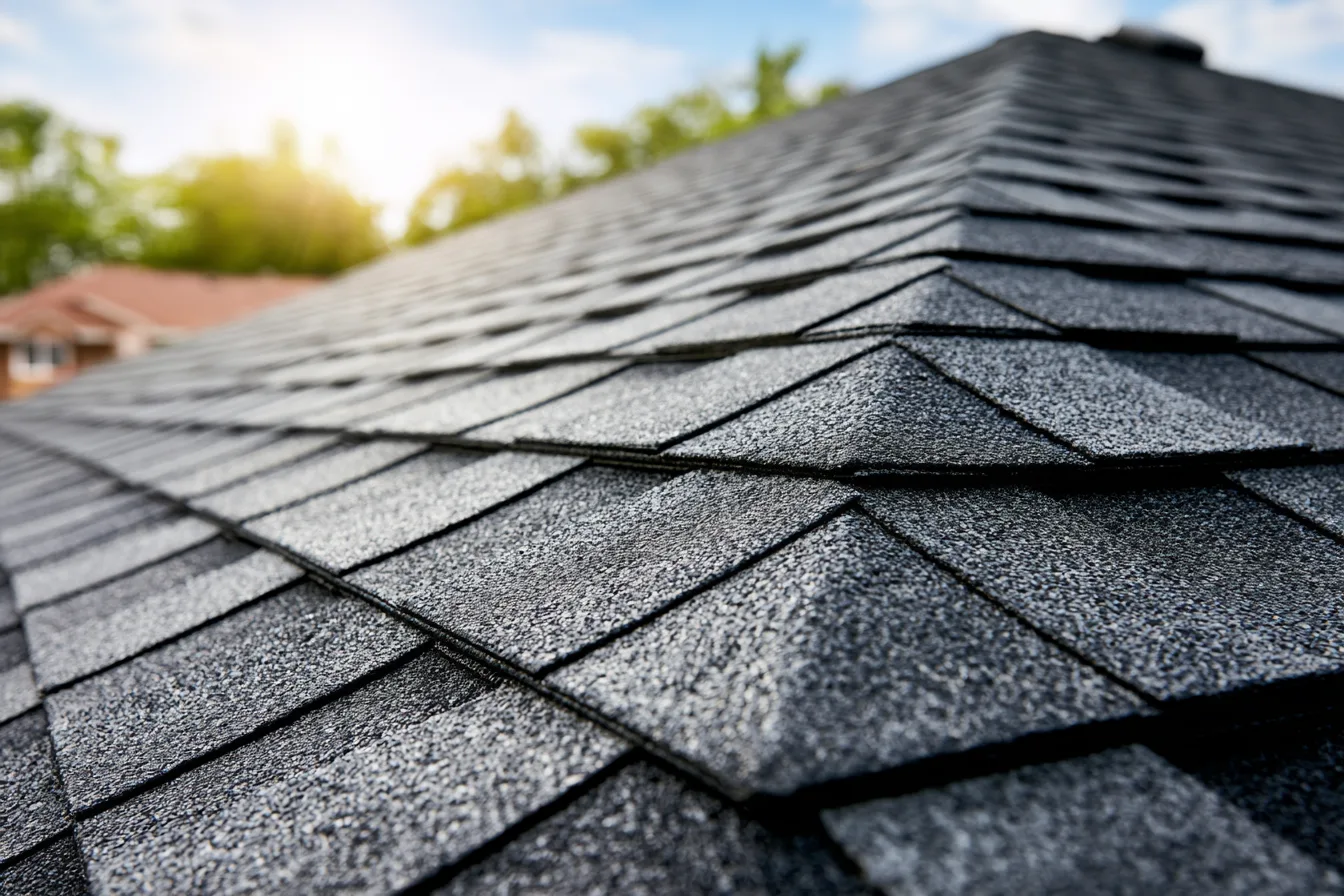
When a Moore roof replacement becomes the useful choice
A replacement is a chance to renew more than the part of the roof you see from the street. The existing covering comes off, the deck can be assessed, and the underlayment, flashing and roof edges become part of a coordinated project. Those details determine how the new covering works on your particular home.
The reason for replacement should be clear. Widespread wear, brittle shingles that cannot accept a sound repair or damage affecting several connected areas can make repeated patching less useful. A roof with one failed detail and healthy surrounding material deserves a different discussion.
Your plans for the house belong in that conversation too. If you want to change the roof material or address an awkward low-slope section, the project has to account for those choices before the new covering is selected. A free inspection gives that planning a physical starting point.
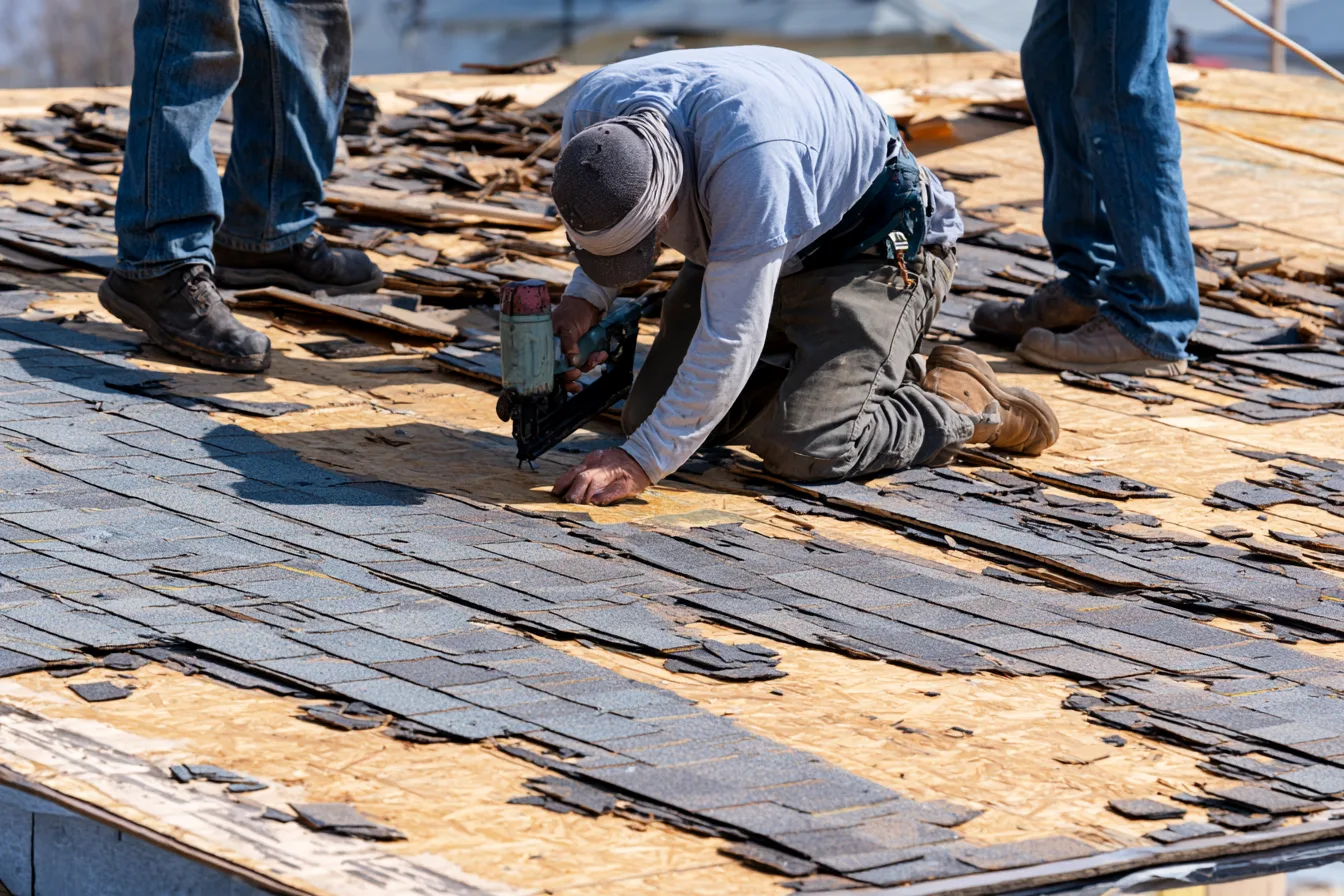
What a roof replacement in Moore includes
A new roof is more than new shingles. Here’s everything that gets touched between the old roof coming off and the last ridge cap going on.
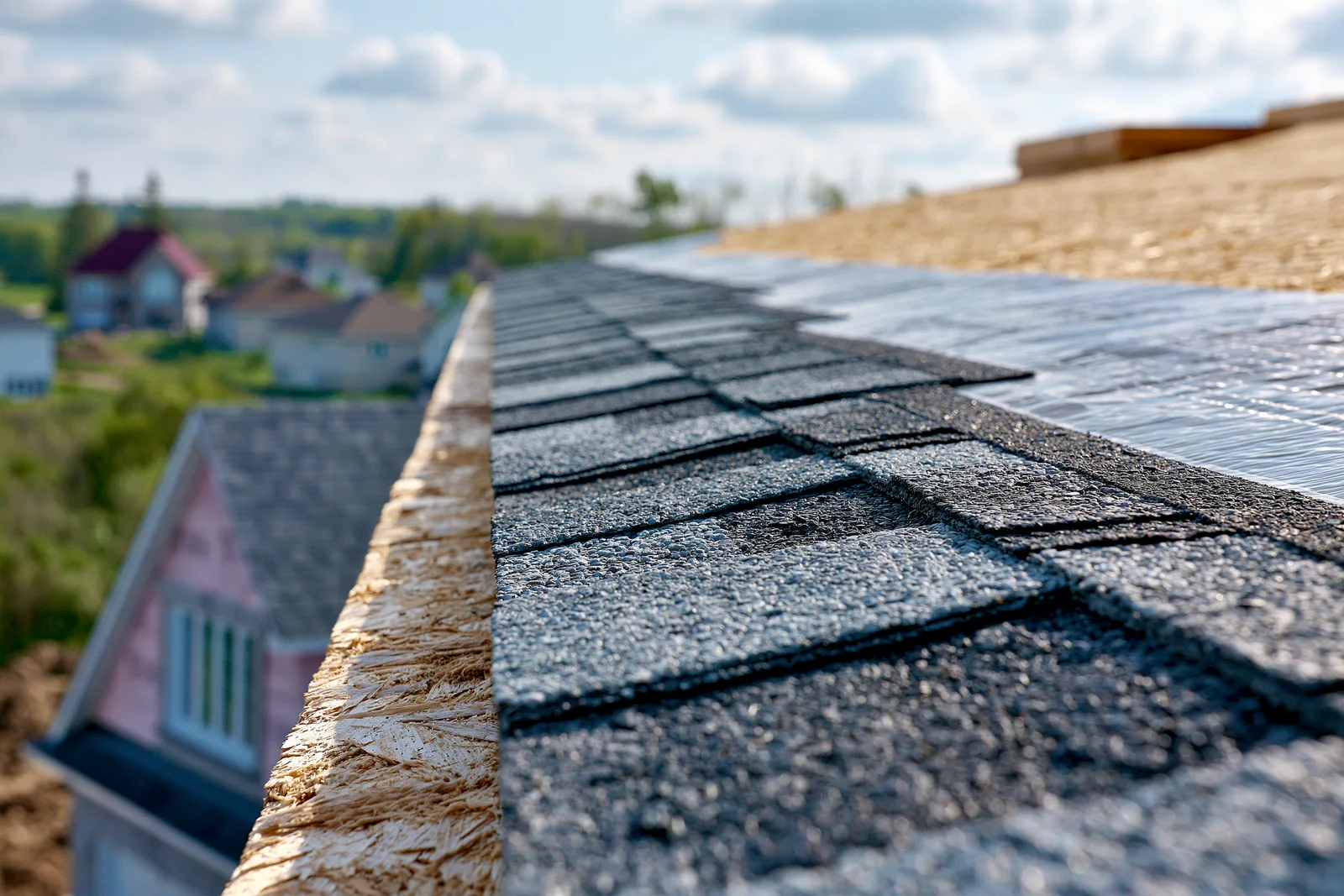
Tear-off
The old shingles and underlayment come off down to the wood. If there’s a second layer of shingles under the first, that comes off too. Removal exposes the upper deck surface and connections that may be hidden during an initial inspection. Any damaged or unsuitable support can then be addressed.
The deck
Removal lets the exposed decking be assessed for deterioration, fastening support, thickness and gaps. Sound material can remain if it meets the selected assembly’s requirements. Damaged or unsuitable areas need repair or replacement, and the proposal should explain how additional decking work will be confirmed and priced.
Underlayment and leak barrier
Underlayment provides a secondary water-shedding layer beneath the shingles. Leak barriers may be needed at particular edges, valleys or penetrations under the applicable code and product details. Placement, laps, fastening and exposure limits follow those requirements; underlayment is not the finished roof.
Flashing, boots and valleys
Pipe, wall, chimney and valley connections must work with the new covering. Boots and flashings are assessed for condition, compatibility and whether they can be reused under the chosen assembly’s requirements. Replacing the visible shingles while leaving an unsuitable connection can leave a leak path in place.
Edges and starter
Metal drip edge goes along the eaves and rakes so water drops into the gutter and doesn’t curl back onto the fascia. A starter strip along the edge gives the first course of shingles something to seal to, which keeps wind from getting under them.
Shingles and ridge
Shingles go on from the eave up, each course nailed through the strip the manufacturer marks for it. Nail placement, count and embedment follow the selected product; misplaced or improperly driven nails can weaken attachment. Ridge caps finish the peaks and hips.
Ventilation
For a vented attic, usable intake and exhaust need to be balanced and kept clear. Unvented roof assemblies use a different approach. A replacement should account for the existing attic design, insulation and moisture-control needs before vents are added or changed.
A Moore roof replacement from tear-off to cleanup
Removal, temporary protection and installation need a sequence suited to the forecast, roof size and property below.
Getting the property ready
Materials get delivered and a trailer or dumpster is set for the old roof. Tarps or plywood protect the plants, AC unit, windows and driveway from falling debris. Cars come out of the garage first, because the driveway will be busy.
Tear-off, a section at a time
The removal area is planned around the crew’s capacity to protect it and the weather conditions. Old shingles, underlayment and fasteners are taken off as required, with temporary protection planned for exposed areas. The daily sequence needs to be agreed for the actual project.
Deck repairs
Bad wood found during tear-off gets replaced right then, before anything covers it. This is the step where the job can grow.
Drying in
Underlayment, specified barriers and edge details are installed in their required sequence. Temporary weather protection must suit the products, exposure limits and forecast. A partially completed assembly is not a guarantee against rain entering the building.
Shingles, flashing and vents
The new covering goes on from the bottom up, with flashing woven in at walls and chimneys, new boots at the pipes and vents cut in where they’re planned.
Cleanup
The cleanup scope should cover debris removal, the accessible grounds and gutters. Magnetic sweeps can help collect metal fasteners but cannot guarantee every nail is found. Discuss protection and cleanup areas with the contractor before work begins.
Choose the covering for your Moore roof replacement
Architectural asphalt
Laminated shingles offer depth and a broad range of colors. Compare the exact product’s installation requirements, ratings and warranty terms. An impact classification answers a different question from a color or dimensional appearance.
Metal systems
Panel profile, fastening and flashing details change both the appearance and the project. The roof must allow for movement and use compatible components. A metal option needs its own scope rather than a simple substitution in a shingle price.
Low-slope sections
A porch or addition can need a membrane system even when the main roof uses shingles. Its slope and transition to the house determine the covering and flashing. The whole property does not have to use one material everywhere.
Planning the cost of a Moore roof replacement
Roof surface, access and the layers beneath the covering each contribute to a replacement budget. Compare those parts of the scope before relying on the total.
Size and shape
A simple gable: two big rectangles, few cuts, little waste.
Hips, dormers and several valleys. More cutting, more flashing and more hours for the same square footage.
Pitch and height
One story with a slope a roofer can walk.
Steep or two-story roofs, which need more safety setup and go slower.
What comes off
One layer of shingles.
Two layers, which means more tear-off labor and more weight to haul off.
The deck
Solid decking that needs nothing.
Sheets of rotted or delaminated decking replaced after tear-off.
The selected covering
The specified shingle product, including its required accessories and installation.
Alternative shingle products or a metal assembly need their own material, detail and labor prices; category names alone do not establish a cost ranking.
The roof cost tool shows published regional planning ranges by roof size for a standard architectural shingle replacement, with their limits spelled out. It’s good for an early budget.
The house’s square footage isn’t the roof’s. Pitch, overhangs and garages all add surface. A roof measurement can be developed with the project scope, so you do not have to guess or climb up there.
Roof Replacement FAQs
Does an old roof always need replacement?
No. Age is context, not a diagnosis. The covering’s condition, repairability, leak history and the condition of its connections matter together. If a localized repair can tie into sound material, replacement may not be the necessary first step.
Can I change the shingle style when replacing my roof?
Yes, replacement is a useful time to consider appearance and product options. The selected material still needs to suit the roof and any property requirements. The shingle types guide explains construction and impact ratings without treating every upgrade as necessary.
Will the house need a roofing permit?
The answer depends on the address and proposed work. Moore’s official guidance directs owners to its permitting process for improvements; it does not settle every roof-cover-only case. Use the Moore permit guide to identify the current authority and scope questions.
How long does a roof replacement take?
It depends on the size and shape of the roof, how much decking needs replacing and the weather. A simple one-story roof is a much shorter job than a steep, cut-up two-story. Tear-off waits for a dry forecast, so the start date can move with the weather.
Does all the roof decking get replaced?
No. Solid decking stays. Deteriorated or unsuitable sheets and boards need attention, including support or spacing that does not meet the chosen assembly’s requirements. The full scope may remain concealed until removal.
Begin your Moore roof replacement with an inspection
Tell us about the roof you have and what you want the next one to accomplish. A free inspection can bring the replacement scope and material choices into focus.
Call (405) 814-1092