Commercial TPO roofing in Moore
Plan TPO repair or replacement around your Moore building’s existing assembly, seams, roof details and operating needs.
Free roof inspections in Moore
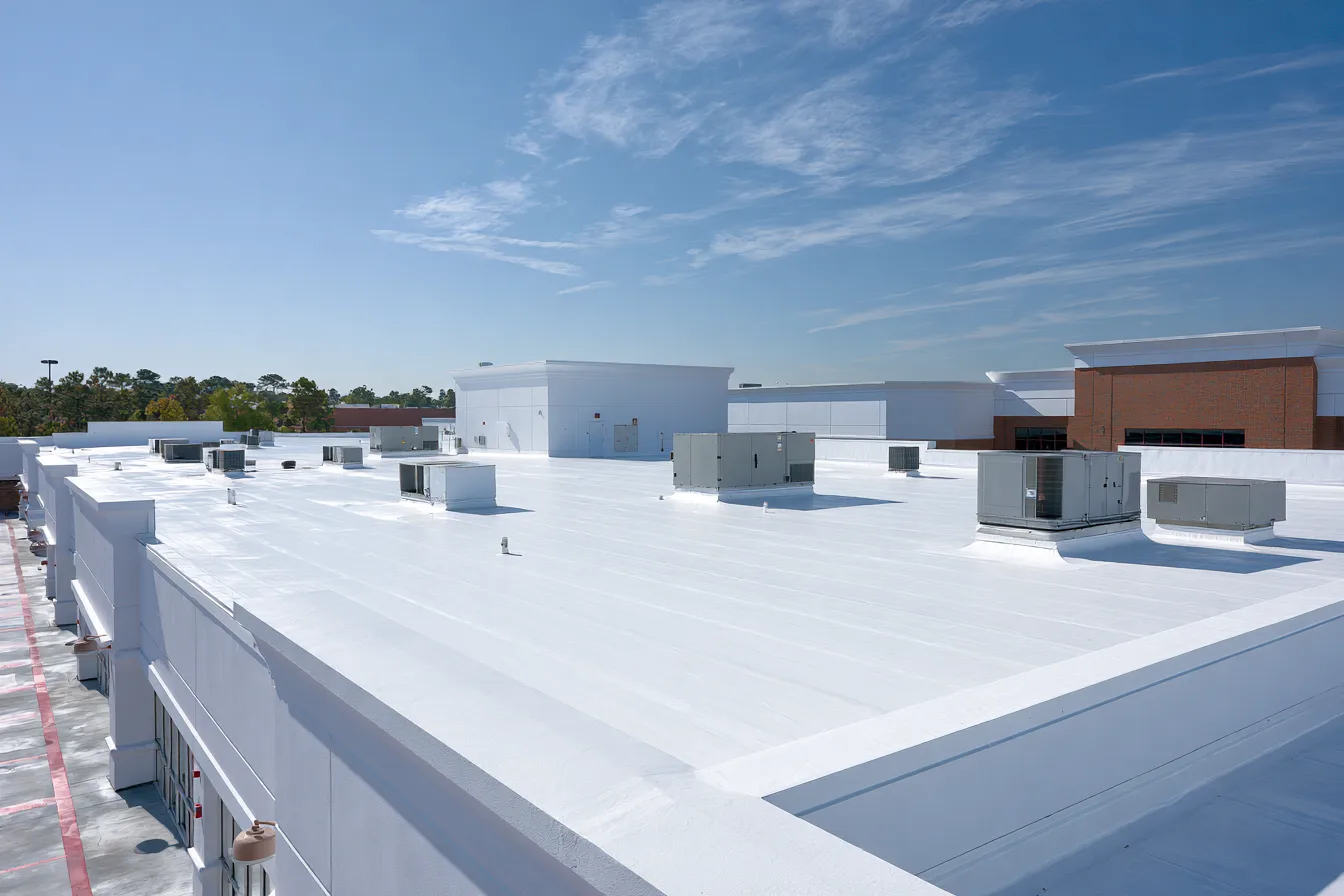
Moore TPO roof work depends on seams and attachment
TPO is a thermoplastic single-ply membrane. Its sheets are joined with heat-welded seams, and the installed roof also depends on its attachment, insulation and details at the perimeter and equipment. Choosing a membrane is only one part of specifying a complete system.
For an existing Moore roof, the first questions are its condition and where a failure has developed. A seam that has opened, a puncture near a service path and flashing at a curb present different repair tasks. The surrounding membrane needs to be suitable for a compatible repair, with preparation appropriate to its age and condition.
The roof below the surface is equally important. Water entering through a small opening can affect insulation beyond that point. The assessment needs to establish whether local repair is enough or whether wet materials and attachment concerns require a wider scope. A new patch should not become a way to leave known moisture sealed inside.
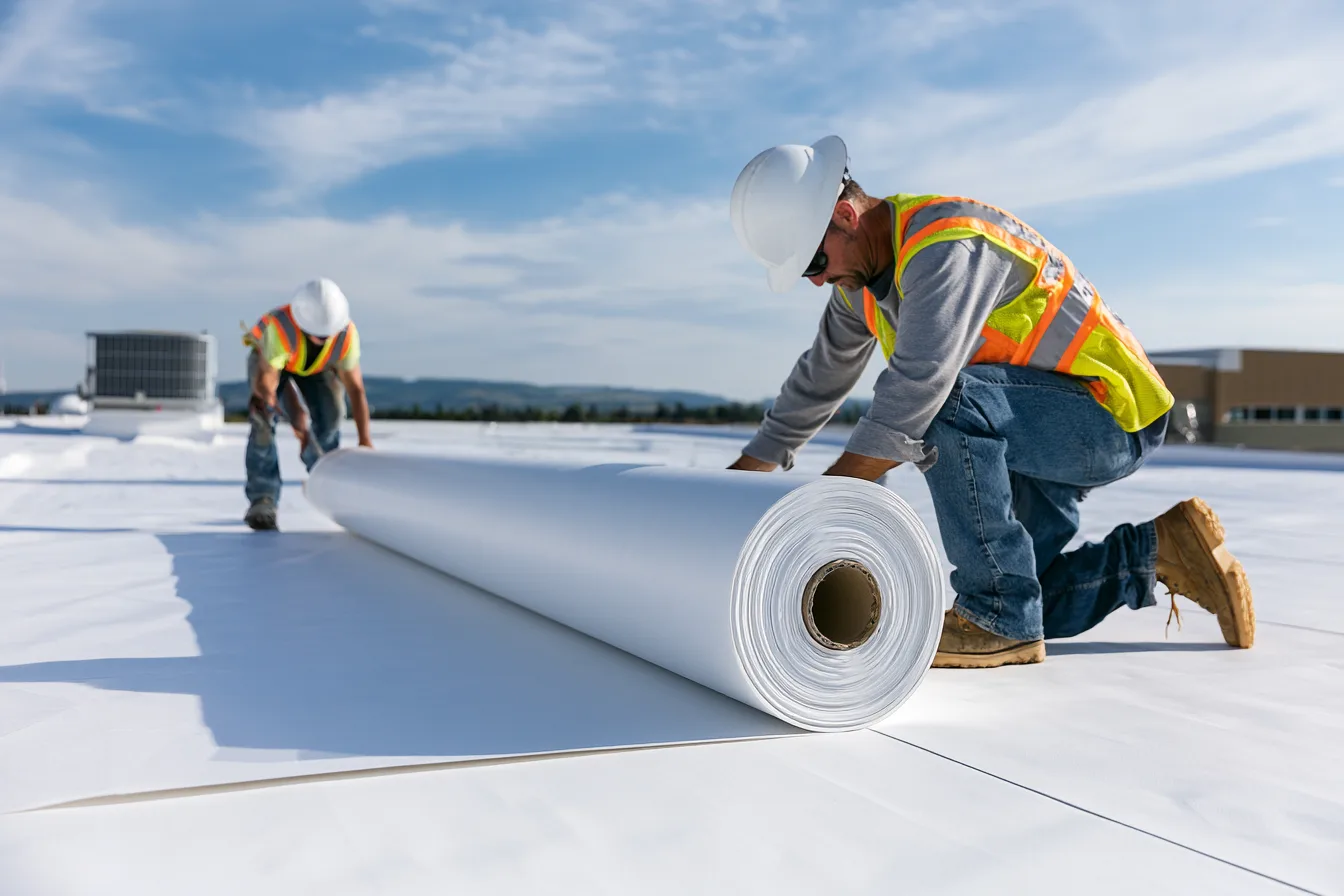
TPO roof repair details for Moore commercial buildings
Seams and transitions
A seam must form a sound continuous connection between sheets. Dirt, weathering and the condition of earlier work affect preparation for repair. Transitions into wall and curb flashings add changes of direction that need their own detail rather than a flat patch stretched across a corner.
Curbs and penetrations
HVAC curbs, pipes and other openings interrupt the membrane. The flashing has to suit the shape, height and movement of the component and the selected system. Equipment work can also disturb adjacent roofing, so the history around a recurring leak is useful.
Edges and service traffic
The perimeter is part of the attachment and weather-resistance system. Repeated access to rooftop equipment can also wear or puncture exposed areas. A repair discussion should account for the routes used by service personnel and the condition of the roof edge.
When a Moore TPO roof needs broader renewal
A local open seam or puncture can be repairable when compatible material can be bonded to the existing sheet and the attachment, insulation and deck remain suitable. The scope includes any affected underlying areas. A test weld and the membrane’s condition can help establish whether a welded repair is feasible.
The picture changes when problems show up in several areas at once: seams failing along whole runs, the surface crazing and thinning, wet insulation across wide sections, or membrane so aged that new welds won’t hold. Those findings can make a contained repair less useful. Compare the extent of required repairs and underlying work with a planned replacement, including what each option leaves in place.
Replacement can mean a full tear-off to the deck or, where conditions and code allow, a new membrane over the existing roof with a separator or cover board between them. A recover also depends on permitted layers, attachment, compatibility, fire and wind requirements, drainage and usable detail heights. Wet or unsuitable material must be addressed before a new assembly is installed.
How a TPO roof is installed on a Moore building
A TPO roof is a stack of layers, and each one is only as good as the one under it.
Tear off or prepare the existing roof
Old roofing comes off to the deck, or the existing surface is prepared for a recover where that’s allowed and the insulation is dry. Wet material is removed either way.
Insulation and cover board
Rigid insulation boards go down in staggered layers, fastened or adhered to the deck. Tapered boards can build slope toward the drains. A specified cover board can provide a suitable substrate and improve protection in an appropriately tested assembly. Board type and attachment matter.
Attach the membrane
TPO assemblies can use mechanical attachment, adhesive or other approved configurations. The deck, tested wind resistance, membrane layout and installation conditions determine the fastening or bonding details. Neither installation speed nor freedom from movement follows from the attachment label alone.
Weld the seams
Overlapping sheets are fused with a hot-air welder into one continuous surface. Seam checks, including probing after cooling where specified, help find openings before work is completed. Weld settings, preparation, attachment and detail work must all meet the selected system’s requirements.
Flash the details
Walls, curbs, pipes and drains each get membrane flashing welded to the main sheet. Corners use compatible preformed or field-fabricated details as specified. Metal edge or coping locks down the perimeter, where wind loads are highest.
Walkway pads
Pads go down along the routes service techs use to reach the units, so boots and toolboxes land on the pads and not the membrane.
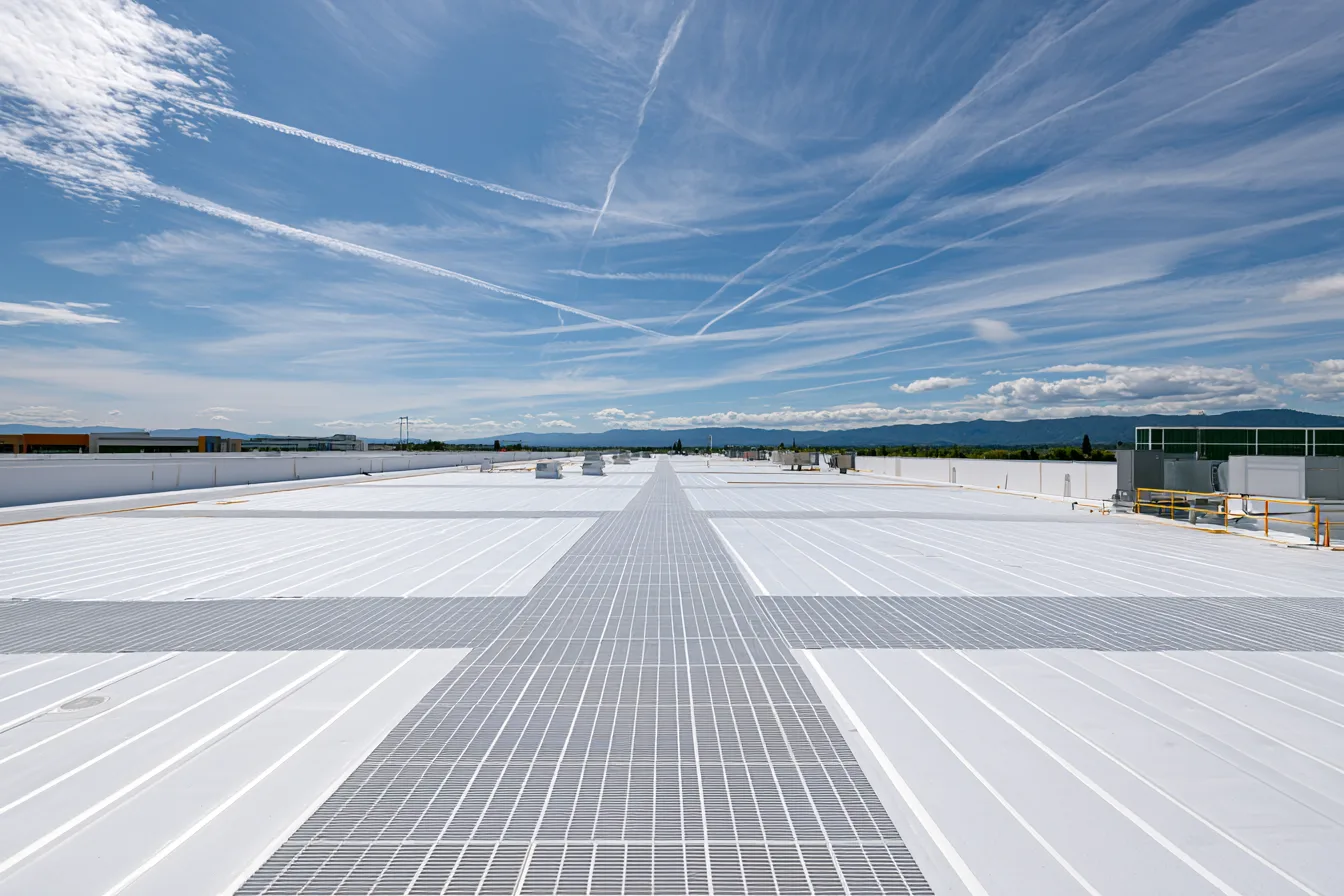
Plan the TPO installation around the building
Keep the building’s use visible
Describe sensitive interior areas, tenant access and operations that roofing activity could affect. Work zones, delivery routes and the sequence of opening and closing sections need to fit the property. Use those details to schedule the work and protection around the building's operating needs.
Coordinate roof equipment
The work may involve curbs, equipment supports or access by another trade. Identify those dependencies while the scope is being developed. The roof layout should preserve necessary service access without treating every existing detail as suitable to reuse.
Budget for the assembly
Tear-off and disposal differ from preparing a qualified existing assembly for recover. Wet insulation, deck repairs and additional layers add their own work. The insulation or cover board, required attachment and perimeter details belong in the same budget as the membrane. Curbs that need raising, equipment that another trade must move and access around an occupied building can also change labor and sequence. A useful proposal identifies those items and explains how concealed findings will be handled.
TPO Roofing FAQs
Is every white commercial roof TPO?
No. Appearance alone does not reliably identify a membrane or coating. Existing documentation can help, and the roofing assessment should establish the material before a repair system is selected.
Can a TPO roof be repaired without replacement?
Yes, when the defect is localized and the surrounding membrane and underlying assembly can support a compatible repair. The scope must include any affected insulation or other materials, not only the visible opening.
Is a coating always suitable for older TPO?
No. Restoration depends on the specific substrate, preparation, adhesion and moisture conditions, along with the coating manufacturer’s requirements. The commercial coatings guide explains why qualification comes first.
Can I begin without roof records?
Yes. Share the property location, the leak or project concern and any access requirements you know. Existing records are useful if available, but identifying the roof and its present condition is part of the assessment.
Discuss commercial TPO roofing in Moore
Tell us about the building and the TPO repair or replacement question. A free inspection can help develop a scope around its current roof and use.
Call (405) 814-1092