Commercial flat roofing in Moore
Assess the membrane, drainage and underlying layers together. Get commercial flat-roof help for your Moore property.
Free roof inspections in Moore
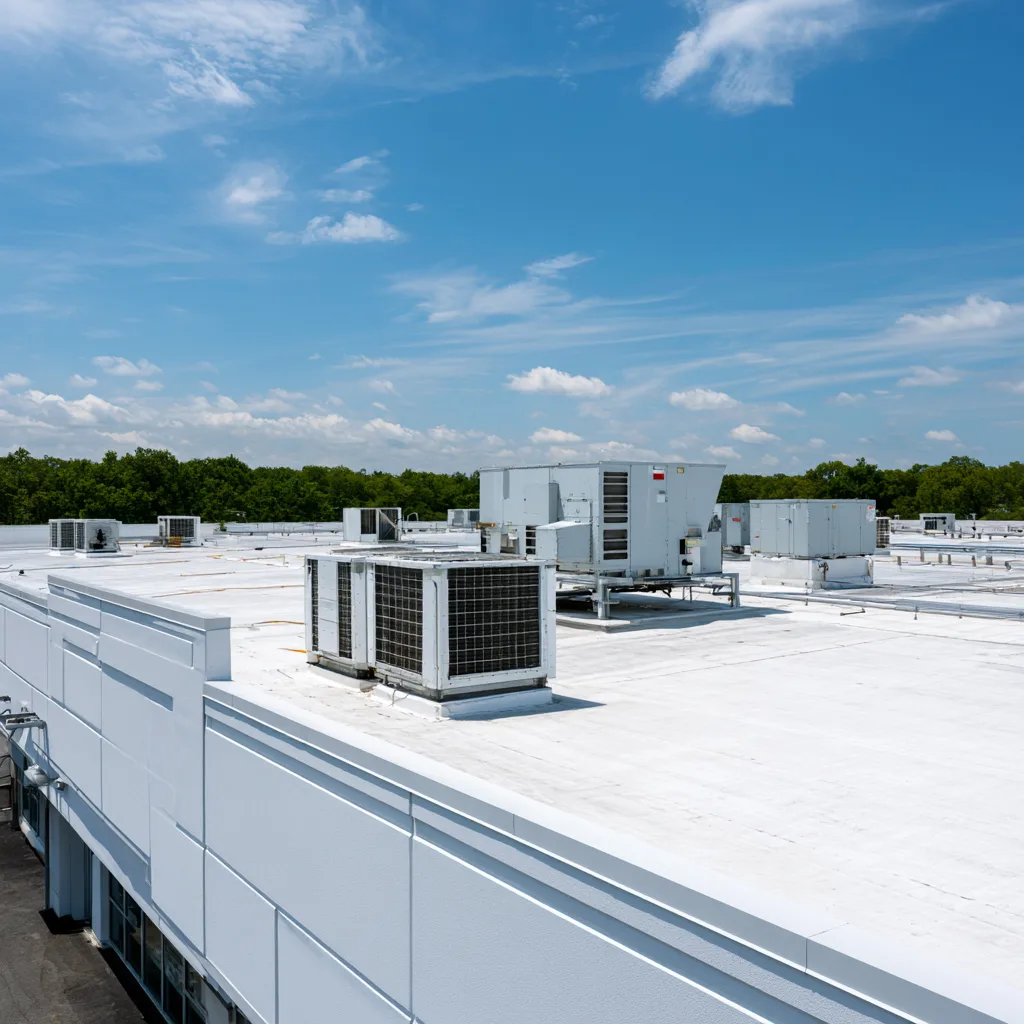
Moore commercial flat roofs need a complete drainage path
A commercial roof needs more than an intact surface. Water has to reach a drain, scupper or edge without being trapped by debris, blocked outlets or unintended low areas. Calling a roof “flat” does not remove the need for a designed drainage path.
The roof assessment follows that path alongside the membrane. A leak beside a drain can involve the drain connection, nearby seams or moisture moving beneath the covering. A low spot can have a different cause from a blocked outlet. The proposed work should distinguish those conditions before choosing a repair.
For a Moore building owner, this matters because a surface treatment can leave an underlying drainage or moisture problem unchanged. Repair, restoration and replacement are useful for different reasons. The decision needs to account for what the roof is made of and how it behaves as an assembly.
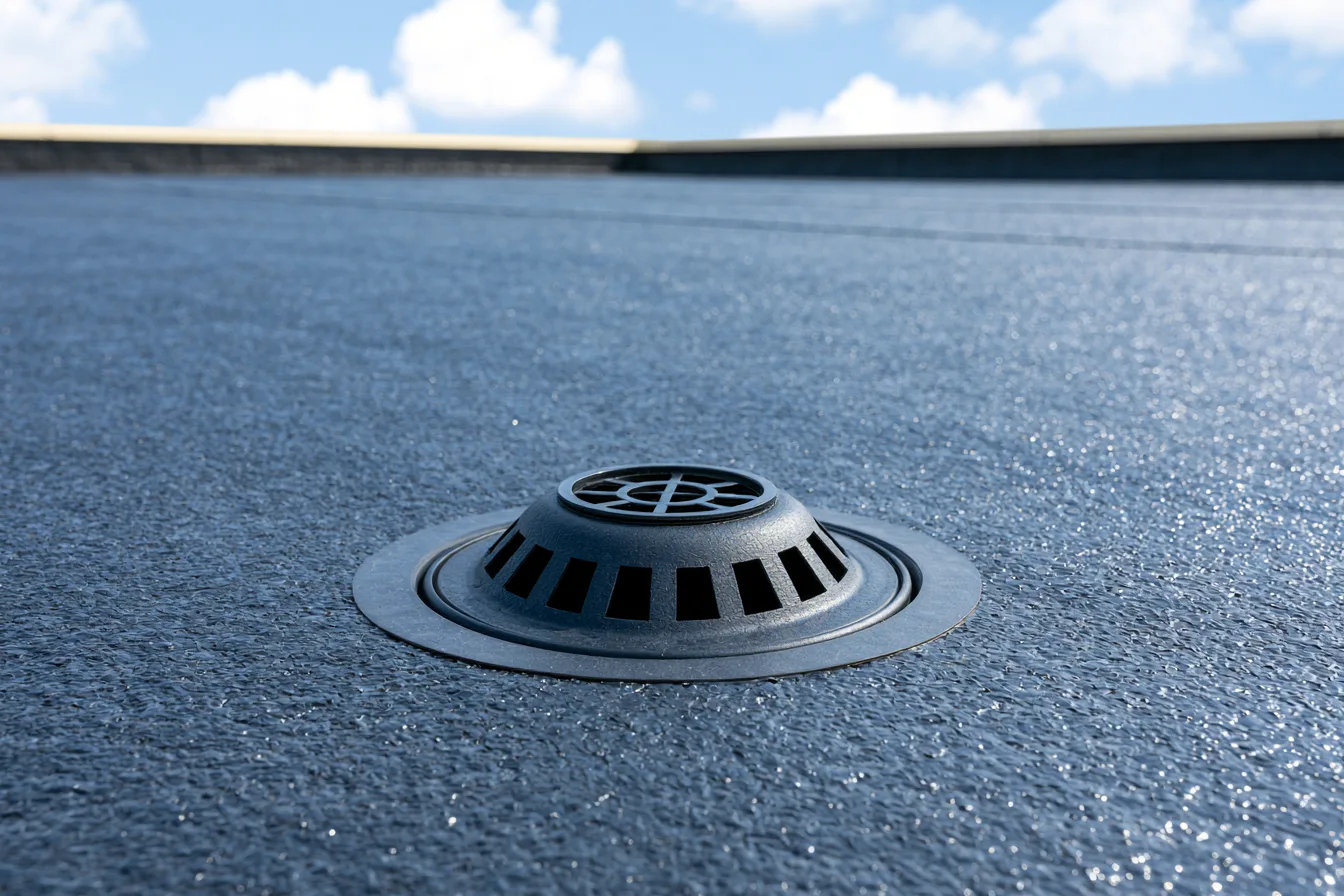
Leak repair and drainage correction solve different problems
Close the source of water entry
A failed seam, puncture or flashing detail admits water through the roof. Repair needs compatible materials, sound surrounding roofing and attention to affected layers below. The ceiling location alone may not identify the entry point.
Restore the route off the roof
A blockage or drainage defect can keep water on the surface even after a leak is sealed. Debris removal and changes to the roof’s slope or outlets are different scopes. The cause determines which action is useful.
Address trapped moisture
Water within insulation or above the deck cannot be resolved simply by making the surface look new. The assessment must establish the affected area and the work needed to restore a sound assembly. That can require opening and replacing materials.
How a Moore commercial flat roof is built, from deck to surface
Knowing the layers makes every bid easier to read, because each line item lands on one of them.
The deck
Steel, concrete or wood provides the supporting deck, and its type affects how the roofing assembly can be attached. Deterioration found during removal needs assessment before the new roof covers it. Repair or replacement depends on the damage and structural requirements; surface rust alone does not establish the full condition of a steel deck.
Insulation
Roof insulation contributes to thermal performance, and tapered layouts can help create a designed drainage path. Insulation type and attachment vary by assembly. Moisture can affect insulation or collect within roof layers; visible softness or continued dripping needs investigation rather than being treated as proof of one material’s condition.
Cover board
A cover board, where specified, provides a compatible substrate and can protect insulation or improve the tested roof assembly’s performance. The board, attachment and membrane are selected together; a generic board does not establish a hail or traffic rating.
The membrane
The waterproofing layer. TPO and PVC are welded plastic sheets. EPDM is glued or taped rubber. Modified bitumen and built-up roofs are layered asphalt. Each is repaired with its own materials, with repair methods selected for compatibility and the condition of the assembly.
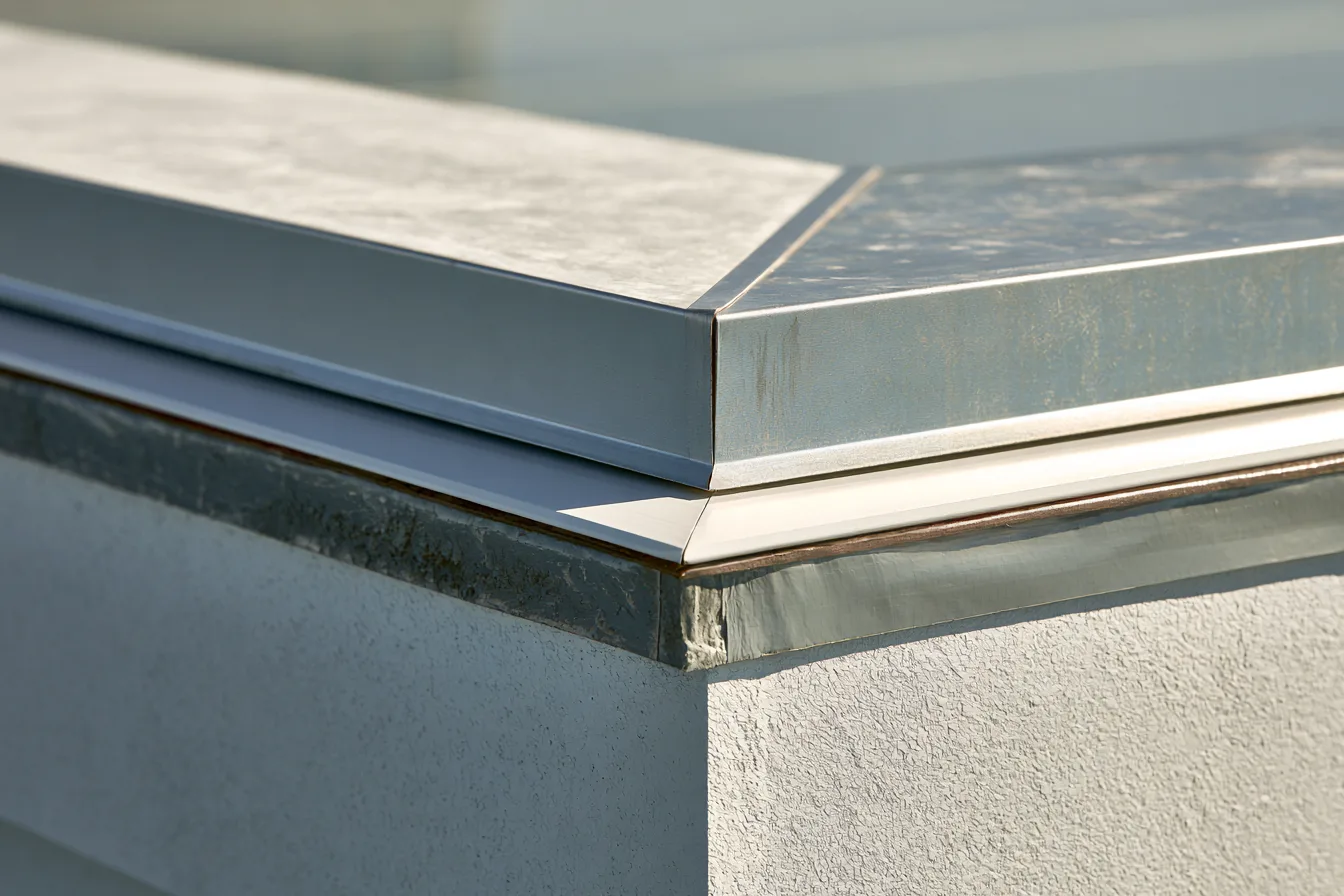
Flashings and edge metal
The membrane turns up walls and curbs and gets capped with metal counterflashing or coping. The perimeter takes the highest wind loads on the roof, so how it’s fastened matters as much as how it looks.
Drains, scuppers and overflows
Interior drains, through-wall scuppers and gutters carry water off. Overflow drains or scuppers set a little higher are the backup if the main ones clog.
Commercial flat roof replacement scope in Moore
Replacement becomes a practical option when the roof cannot be restored to dependable service with a confined repair. Its value is the opportunity to address the layers and connections together.
Existing materials and removal
The number and condition of roof layers, moisture and deck support affect what can remain. Applicable requirements and the chosen system guide the assembly. A recover is not an automatic alternative to removing a wet or unsuitable roof.
Insulation and drainage design
Insulation selection affects the assembly, and tapered components can be part of a designed drainage solution. The roof’s existing geometry, outlet elevations and structural conditions need to be understood before a slope correction is proposed.
Perimeter and equipment details
Parapets, coping, curbs and penetrations must connect properly to the new surface. Keeping them unchanged can leave the project dependent on worn or incompatible details. Their condition belongs in the replacement scope.
Plan Moore flat-roof work around access and equipment
The occupied building below the roof changes how work is planned. Deliveries, debris removal, entrances and service areas have to be considered alongside the roofing sequence. Let the conversation include activities that are difficult to relocate or interrupt.
Rooftop equipment adds another layer of coordination. Curbs, ducts, supports and service routes affect access and detailing. Roofing and mechanical work should be discussed together when a proposed change touches both, rather than assuming every penetration can remain exactly as it is.
Cost follows that complete scope. Roof size, access, removal, insulation, deck repairs and the complexity of equipment details each contribute. An inspection can identify the known work and the concealed conditions that still need to be resolved.
Commercial Flat Roofing FAQs
Does water on the roof mean it must be replaced?
Not automatically. The cause, duration and effect of the water need assessment alongside the roof system’s requirements. A blocked drain and a broad low area are different problems, and the surface condition alone does not establish the condition below.
Can a coating correct poor drainage?
A coating does not change the roof’s shape or the elevation of its outlets. Drainage and moisture conditions must be resolved as part of determining coating suitability.
What if I do not know the existing membrane?
You can still request help. Describe the building, the problem and any past repair you know about. Identifying the roof system is necessary before choosing compatible repair materials, but you do not need to do that identification yourself.
Start a Moore commercial flat-roof assessment
Bring the roof concern and the building’s operating needs into one conversation. Request a free inspection to discuss the useful scope.
Call (405) 814-1092